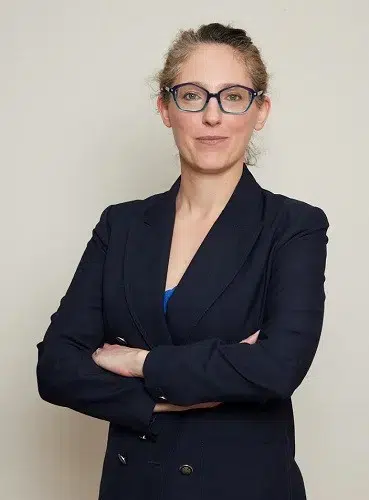
For Alexandra Dublanche, president of Choose Paris Region, the strength of Île-de-France lies not only in its economy, but in a work culture that promotes exchange, innovation, and the diversity of talents.
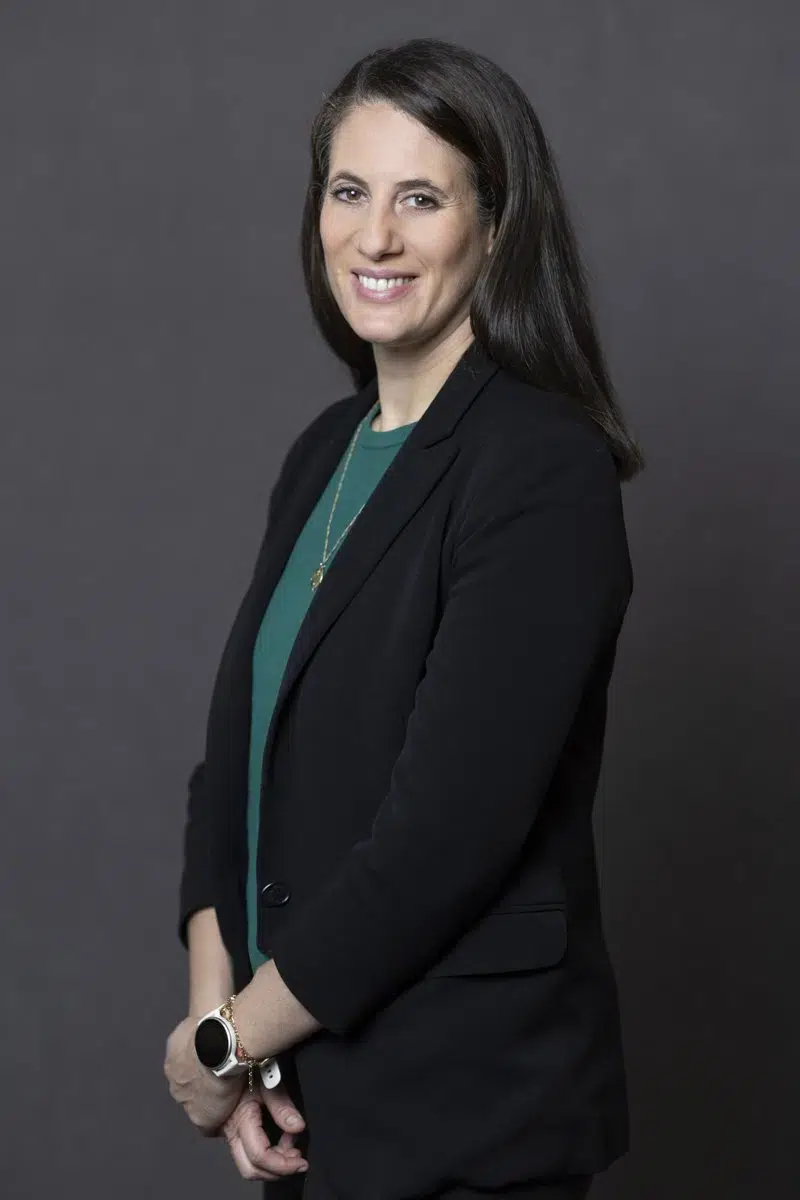
Alexandra DUBLANCHE
President, Choose Paris Region
© IP3 Press
What are the main advantages of Île-de-France today to convince an international company to set up there?
Île-de-France boasts very concrete assets. First of all, it is an exceptional market in terms of size and density, with more than 12 million inhabitants and one of the richest economic fabric in Europe. Companies find customers, partners and talent there.
But it is also a leading innovation ecosystem, with research centers, state-of-the-art infrastructure, and a high concentration of international headquarters. Investors today seek this combination of economic performance and quality of life. Paris and its region offer this balance.
What types of foreign companies are choosing Paris and Île-de-France today?
We are observing an increase in the range of profiles. Major international groups are establishing their regional headquarters, while more and more companies, especially in the fields of artificial intelligence, healthcare and energy transition, are scaling up. In 2025, decision-making centers confirm their role as the main driver of job creation. The number of jobs generated skyrockets by 89 %, reaching 3,390 positions, compared to 1,795 in 2024. At the same time, investments continue to grow, with 181 projects registered, an increase of 21 % over a year.
Paris is also emerging as one of the main European hubs for AI, with nearly 20,000 jobs related to this sector*. This dynamic shows that Île-de-France is no longer perceived solely as a market but as a territory of innovation and value creation. Our investments now come from 44 different countries, compared to 38 a year earlier. In 2025, 12 new countries join the list of investors compared to 2024. Norway stands out with four direct international investments, while Luxembourg, Portugal and Ivory Coast each have two. Eight other countries are making their debut with an investment: Australia, Algeria, Qatar, Senegal, Kuwait, Lithuania, Angola and Hungary. This evolution demonstrates an increased diversification of the geographical origins of investments.
* According to a LinkedIn study published on the occasion of VivaTech 2026.
Is there a «French Touch» to the work that constitutes a competitive advantage?
Yes. It is not based on clichés, but on a professional culture that values critical thinking, debate of ideas and the search for meaning. The exchanges may seem more direct than elsewhere, but they allow the best solutions to emerge. International talent is often surprised to see it as a real driver of innovation. This culture finds in Île-de-France a unique expression ground thanks to the concentration of researchers, universities, large schools, headquarters and startups. Île-de-France generates 30% % of the French GDP, accounts for 38 % % of national R&D spending, and employs 39 % % of the French research workforce, as well as 29% % of the country’s scientists and engineers. French Touch is not just a way of working: it is a way of learning from each other.
Does France still dream up the dreams of foreign talents?
Yes, and it is a formidable opportunity. Few territories boast such powerful tourist, cultural, economic and scientific influence. Many first discover Paris during a trip or a business trip before choosing to study, start a business or build their careers there. This appeal is also based on solid fundamentals: artificial intelligence, healthcare, finance, creative industries, or even energy transition make Île-de-France one of the world’s leading regions of innovation.
Our responsibility is to transform this capital of sympathy into lasting attractiveness. This is the very essence of the action we are undertaking with Choose Paris Region: supporting businesses, welcoming tourists and international talent, and ensuring that those who come to discover our region also have the desire to build their future there.
Is the balance between work and personal life perceived as a strength of the French model?
Many expatriates arrive with certain clichés and think that this balance translates into less involvement in their work. They quickly discover a different reality.
Île-de-France allows you to combine world-class professional opportunities with exceptional quality of life. Today, attracting talent also means providing support for their relocation: housing, children’s schooling, integrating the spouse, and administrative procedures have become decisive criteria.
What is the professional quality of the French that we underestimate the most ourselves?
International talent often speaks of the richness of professional interactions. They are quickly integrated into teams where exchanges are direct, demanding, and stimulating. They also highlight the diversity of profiles encountered on a daily basis, including engineers, researchers, entrepreneurs, and international experts, which accelerates learning and promotes skill development. It is this very concrete experience of working in Île-de-France that, in my opinion, constitutes one of the most underappreciated strengths of the region.
In the age of teleworking, what makes the Francilienne offices unique?
The office has become a place where people come to collaborate, innovate, learn and meet their teams. This is profoundly transforming the business districts. Défense illustrates this evolution. First European business district, it now combines offices, shops, culture, leisure and public spaces. Its accessibility is also a major asset, reinforced tomorrow by the Grand Paris Express. This approach is what, in my opinion, makes Île-de-France unique: we no longer only think about office real estate; we are building districts where people can work, train, have fun and live. It is this quality of the overall experience that is now becoming a real attraction factor for international talent.
How can Île-de-France further strengthen its attractiveness?
Competition between major metropolises is global. We must continue to invest in infrastructure, support technological transitions, and develop territories capable of meeting the expectations of businesses and talent. Paris-Saclay 2035 embodies this ambition: new laboratories, the development of strategic sectors such as artificial intelligence and quantum physics, the arrival of Line 18 of the Grand Paris Express, but also housing, shops, and cultural facilities. Today, the competitiveness of a metropolis depends as much on its ecosystem as on its quality of life. This combination is what makes Île-de-France unique.