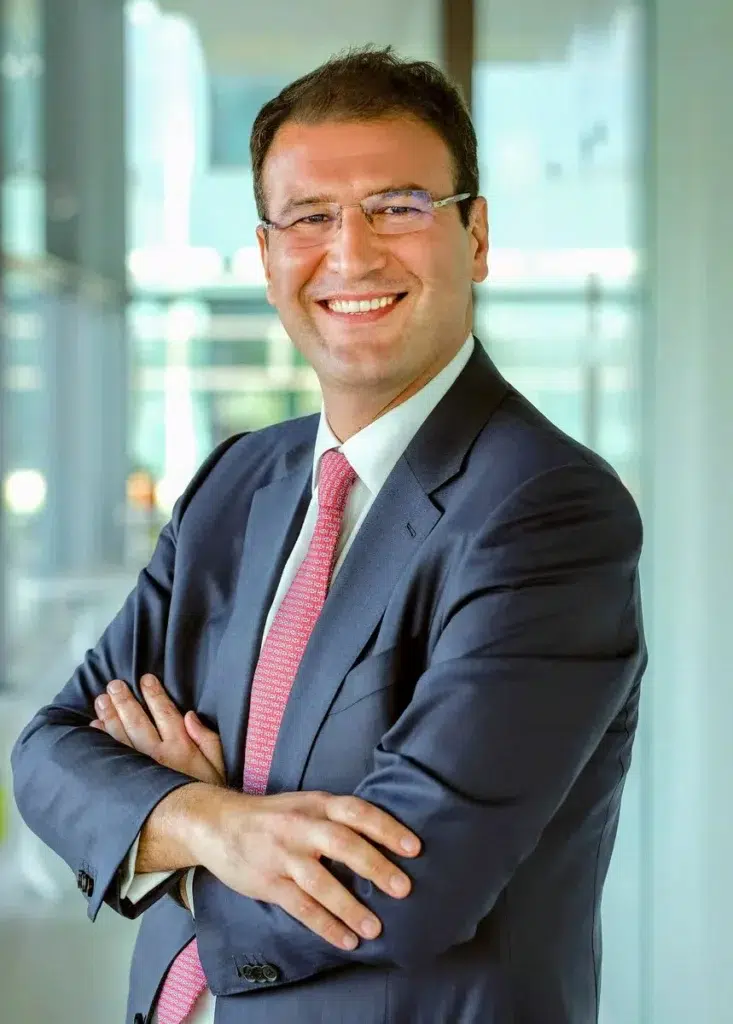
Why does Paris continue to attract major international companies? Mohammed Kherraf (J.P. Morgan) explains what makes the French capital unique.

Mohammed KHERRAF
Deputy Head of Design and Construction EMEA, J.P. Morgan
DR
You have worked in several countries. How do you view Paris’s attractiveness today?
For international companies, Paris retains a special place among major metropolises. Its first advantage is the depth and diversity of its economy: France has a dense network of businesses, talent, and sectors of activity. Brexit has also reshuffled the playing field. London remains a major financial center, but international companies have had to rethink their presence in Europe. Paris naturally benefited from this development.
Beyond economic criteria, the image of Paris internationally plays a decisive role. Many international employees aspire to live there. Heritage, culture, and gastronomy strengthen the city’s appeal, even though these aspects are not always explicitly included among the real estate criteria.
What does Paris have that other major cities don’t have?
Each city has its own strengths. London boasts an exceptional historical depth in financial terms; Frankfurt is a major financial center in Germany. Paris combines a more rare combination: a diversified economy, global reach, and a strong ability to attract talent. I often cite Frankfurt as an example. It is a highly performing city economically, but its appeal largely rests on its financial activity. Paris, by contrast, retains real vitality beyond office hours, both in the evening and on weekends. Paris has another strength: it is not limited to its economic activity alone. The city possesses a cultural and urban wealth that also contributes to its attractiveness.
Is the scarcity of Parisian buildings also an asset for international investors?
Yes. Land scarcity, particularly in the central business district, is an important factor. High-quality and well-located assets are increasingly difficult to find. For an investor, this scarcity supports the long-term value resilience.
The geography of the market is also evolving. The central business district remains a reference point, while other sectors are gradually gaining in attractiveness. The boundaries between traditionally considered «prime» neighborhoods and emerging markets are thus becoming more permeable.

In what areas does Paris still need to improve compared to London or other international metropolises?
We still have room for improvement in the quality of reception and the animation of neighborhoods. In London, projects are often designed on an urban scale, with services, restaurants, shops, and living spaces around the buildings. In France, we sometimes tend to ask the building to integrate functions that are less present in its immediate environment. However, an employee no longer looks only at their office: they also consider what they can do before, during, and after their workday – lunch, exercising, receiving a client, or easily accessing transportation.
Does this change the way Parisian offices are conceived?
Yes. Today, a building must offer a consistent experience. The address matters, but so does the quality of everyday use. Between two buildings that are geographically close, the difference may lie in services, common areas, the ability to organize events, or the quality of customer service. The immediate environment – neighborhood, shops, transportation, and urban life – therefore becomes a real selection criterion and contributes fully to the attractiveness of the workplace.
Has the environmental dimension become a marker of the French model?
Yes. France has taken the lead on these issues, notably thanks to a largely decarbonized energy mix and regulations that have pushed actors to improve the performance of buildings. Some obligations may have been perceived as burdensome, but they have also contributed to the evolution of the market. Today, environmental performance is among the criteria examined by international companies, alongside usage, services, and the quality of the experience offered.
After several years abroad, what view do you have of the French way of working?
What I often miss abroad is the diversity found in Paris. Its culture, museums, gastronomy, and the variety of its neighborhoods give it a special richness. But this identity must be preserved. I regret seeing some local businesses disappear in favor of more standardized brands. The strength of Paris lies precisely in this balance between an international metropolis and a city with a unique personality.
« The strength of Paris lies in this balance between an international metropolis and a city with a unique personality.»
Mohammed Kherraf