At the helm of Paris–Île de France Capitale Économique, Chloë Voisin-Bormuth unravels the forces of Paris and shows how the «French Touch» can become a real competitive advantage.
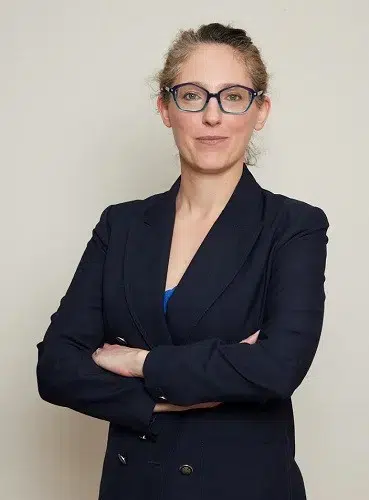
Chloë VOISIN-BORMUTH
General Director, Paris–Île de France Economic Capital
What is the mission of Paris–Île de France Economic Capital?
We are the «lab’ for the attractiveness of Greater Paris, created in 1991 by the CCI Paris–Île de France. Our work consists of analyzing the trends that shape the attractive metropolises of tomorrow, identifying the sensitive points, and proposing concrete solutions so that the Capital Region can gain weight on the international stage.
On paper, Paris has solid economic fundamentals: is that the image it conveys?
It’s a real French paradox. The fundamentals are solid: economic depth, quality of talent, infrastructure, regulatory environment. Yet, the «French Touch» sometimes remains associated with a France brimming with energy, friendly, creative, but not always perceived as hyper-serious. The financial rankings illustrate it well: Paris is 4the Global in the OFEX, which measures the fundamentals of financial ecosystems, but only 19e In the GFCI, which largely incorporates the perception of professionals. The gap between reality and reputation is striking.
What is it that, in a very concrete way, builds this professional solidity that perception does not reflect?
That is precisely what is less visible: the depth of the market, the quality of training and infrastructure, the continuity of the institutional framework – the base of Maslow’s pyramid of economic attractiveness. To this are added a pool of the most dense talent pool in Europe and a tech and AI scene that places Paris on the global map.
Culture, gastronomy, the art of living: does it really weigh in the decision-making process when it comes to establishing companies?
Once the company is established, these aspects become crucial in attracting talent. But even when choosing a location, this can make a difference: Paris doesn’t just sell an address; it sells what that address tells about. Culture, style, and the way of life: few metropolises have such a powerful brand image. With comparable offerings, this aura can transform the experience, directly impacting the image of the company and its products. This «French Touch,» sometimes, can bring in billions.
«The “French Touch” is sometimes associated with a France brimming with energy, friendliness, creativity, but not always perceived as being hyper-serious.»
Chloë Voisin-Bormuth
Precisely, what role does this postcard-like image play in the «professional» Paris?
It works, undeniably. The Eiffel Tower remains the number one symbol, the reflex image of Paris internationally. The challenge is not so much to turn away from it, but to capitalize on this strength to broaden the imagination: to show that Paris is not just a postcard; it is also the Grand Paris, its new neighborhoods, its centers, its places of creation and innovation.
Is this shift starting to be noticed from abroad?
Yes, more and more often. And it’s quite amusing: it’s sometimes the foreigners, who are the most fond of the Parisian postcard, who reveal the true qualities of Greater Paris to us. In a recent article, the Wall Street Journal So we see the suburbs with the positive codes of the American suburbs: house, garden, space, greenery. But the «French Touch» is never far away: Paris remains at the end of the garden, and soon even more accessible thanks to the Grand Paris Express.
Every year, SFL measures a series of indicators that allow us to understand how employee expectations regarding their workplace are evolving.
On a scale of 1 to 10, how do you rate your well-being at work?
Evolution of the overall score — note on 10, by wave, from March 2016 to June 2026
The 10-point wellbeing rating reaches a record level, illustrating the «refuge» nature of the company.