Giuseppe Amitrano, founder of Dils, has just installed his European platform in Paris through the acquisition of EOL. He breaks down what makes the Parisian market unique.
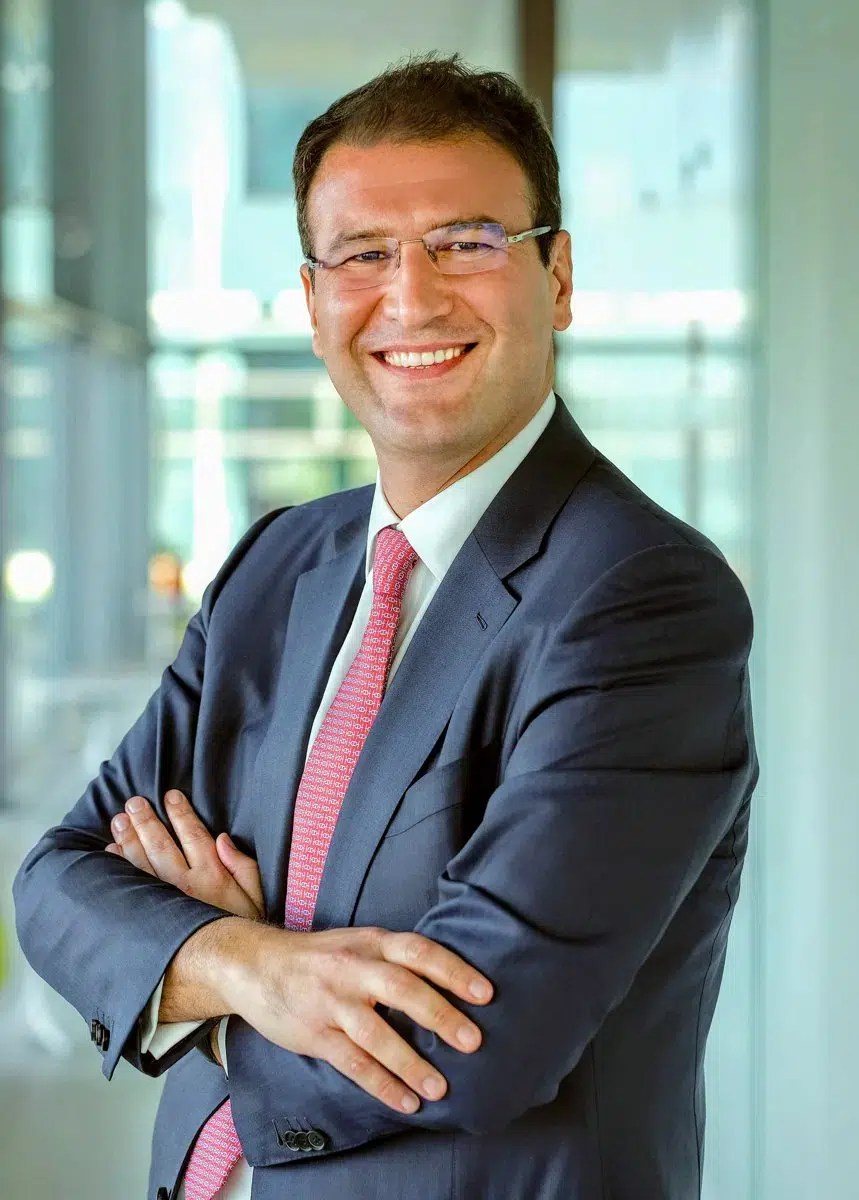
Giuseppe AMITRANO
Founder, Dils
DR
Why was Paris a necessary stop on your European development?
There is no European platform without France. We started in Italy, then in the Netherlands, Portugal and Spain between 2023 and 2025: France was supposed to follow suit. We bought EOL, a specialist in logistics, industry and trade with 25 years of history, 70 professionals and 10 locations across the country. This comes as a surprise to those who expect to see a consulting group arrive in Paris through the office market.
But we don’t enter a country by planting a flag and then recruiting. We enter through a team we believe in, and then build around it. That’s how we did it in Amsterdam, Lisbon, Barcelona and Madrid. Our ambition is to reach about 250 professionals in France within five years, in offices, hotels and residential properties. Paris is therefore not a step for us; it’s a base.
What image does the Parisian market convey, seen from Italy, Portugal or Spain?
Paris is the market that reassures. When international capital returns to Europe, it turns first to Paris. Our research confirms this: French real estate investment rose by about 19 % percent last year, to nearly 21 billion euros, of which 7 billion went to offices. No other market on the continent offers such depth. From Milan or Madrid, this creates confidence; such a market behaves in a clear manner, but also creates competition, as good assets are already in dispute. Paris also rewards quality: the difference between a good and a bad property is more pronounced there.
Is there a genuine «French touch» in the Parisian office life?
Yes, and I would define it in square meters. In Paris, a large part of an apartment’s budget goes towards the spaces for welcoming and meeting people, the lobby, the restaurant, the terrace, rather than towards those that produce work. In Northern Europe, the same budget will be used for technical performance. Enter the Parisian and Rotterdam offices of the same company: you will see two different offices.
«In Paris, a large part of the budget goes towards the reception areas, the lobby, the restaurant, and the terrace, rather than towards those who produce work.»
Giuseppe Amitrano

Do the Haussmannian buildings and heritage addresses still count as much?
It is even one of the reasons that made Paris attractive to us: we carry out the same restoration work on historical buildings in Milan. But the heritage tax premium is no longer automatic. It requires demanding standards: energy performance, flexibility of spaces, accessibility. An old building that has been well restructured remains the strongest asset on the market; left as it is, it rents less well than a modern building, which is nevertheless less prestigious. The address opens the conversation, the quality of the building concludes it.
In your opinion, what surprises expatriates the most when they discover the Parisian offices and the professional life in the Paris region?
I will answer as a European who works in five countries, rather than as an expatriate. What strikes me most is how much everything is codified: in Italy or Spain, many things are negotiated on a case-by-case basis. In France, almost everything is governed by a framework, including teleworking, which is negotiated rather collectively, in the form of an agreement, rather than individually with a manager. Coming from a more improvisational culture, this may seem rigid at first glance. Then you realize that it’s also more equitable, and everyone knows what to do. The second surprise is the importance of the headquarters: in France, you expect it to say something about the company; elsewhere, it works well.
Paris allows you to work, have lunch, go out and enjoy culture within a limited area. Is this an idealized vision, or a real asset compared to other European metropolises?
It’s real and measurable, in the commuting times as well as in what people do at noon. It’s not unique: the center of Milan operates in a comparable way, just as Amsterdam on a smaller scale. What distinguishes Paris is the continuity: elsewhere in Europe, this dense fabric stops at a few blocks from the center, whereas in Paris it persists over a much larger area. I would add an honest observation as a new investor here: this picture only applies to the inner city of Paris and its immediate suburbs. A large part of the real estate in the region is located further away, in the Parisian suburbs, where this dense neighborhood life remains an objective rather than a reality for the companies that settle there. This is the region’s main weakness, but it’s also what the new transport infrastructure can best correct.